Dan Lafferty Murder Trial and Sentencing
Under the Banner of HeavenThe Dan Lafferty Murder Trial and Sentencing turned a prosecution for the murders of Brenda Lafferty and Erica Lafferty into a stark confrontation over punishment, remorse, and the limits of a jury’s power. Dan was convicted of two counts of first-degree murder, but the jury’s division prevented a death sentence; Judge Bullock instead imposed two life terms and ordered Dan confined in the Utah State Prison.
Trial and Conviction
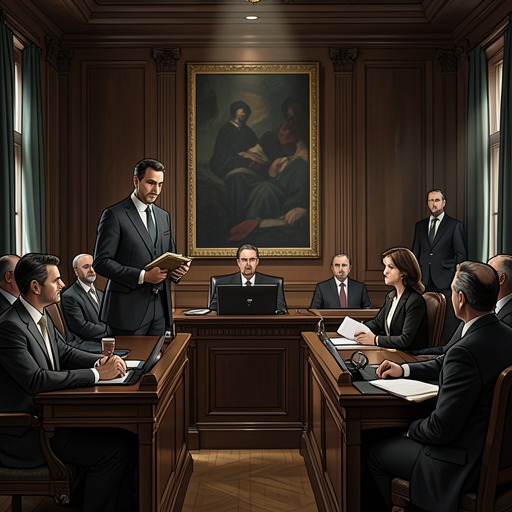
The court appointed two attorneys to represent Dan, but he chose to defend himself, leaving them in advisory roles. Five days after the trial began, the jury entered deliberations. Nine hours later, it returned guilty verdicts on both first-degree murder counts.
The proceeding then moved to the question of whether Dan should be sentenced to death. He told the jurors, “If I was in your situation, I would impose the death penalty,” and promised that he would not appeal if they chose that punishment. His stated willingness to accept death did not settle the jury’s decision.
The Jury’s Division
Ten jurors voted for a death sentence, but two would not join them. Because a capital sentence required unanimity, the division spared Dan from execution. The jury foreman later alleged that one of the jurors who opposed death had been swayed by Dan’s eye contact, smiles, and other nonverbal behavior, and had consequently disregarded the evidence and the judge’s instructions. The foreman was furious that Dan had avoided a death sentence in this way; the account is his characterization of the juror’s decision, not a finding reported by the court.
Sentence and Judicial Rebuke
Judge Bullock addressed Dan with open scorn, saying it was “man's law, which you disdain, that saved your life.” He described the murders of Brenda and Erica as cruel, heinous, pointless, and senseless, and said he had never seen an accused show so little remorse or feeling. His condemnation came from a judge who had presided in 1976 over the notorious trial of Gary Mark Gilmore for the unprovoked murders of two young Mormons.
After noting that the jury had failed to agree on death, Bullock said he intended to ensure that every minute of Dan’s life would be spent behind prison bars. He sentenced Dan to two life terms. The sentence thus made the jury’s procedural division decisive: Dan would live, but the court imposed permanent imprisonment as the consequence of his convictions.
Later Dispute Over the Account
A later account of the murders introduced a dispute about who had wielded the knife. Dan said that, during the drive from Salt Lake to Nevada, he described the killings to Ricky Knapp and Chip Carnes and made clear that he, not Ron Lafferty, had killed Brenda and Erica. Chip Carnes gave a different account in sworn testimony at a 1996 trial, saying that Ron, rather than Dan, told them about the murders during the drive. Dan accepted the essential facts in part of Carnes’s account but called the rest fictional and continued to insist that he had killed Brenda.
The disagreement over that later disclosure does not alter the verdicts or sentence described in the trial account, but it shows how responsibility for the killings remained contested in subsequent testimony. Dan also argued that Carnes had reason to cooperate with the prosecution: after Carnes’s arrest, the state had threatened capital charges unless he provided evidence leading to convictions of both brothers, while offering a substantial deal for useful testimony.